
The last conversation between the two leaders was on April 4 on the issue of hydroxychloroquine.

The Indian Army has occupied several key heights in the strategically located Rezang-La and Reqin-La areas on the southern bank of the lake since the end of August.

The Indian side is expected to seek disengagement as soon as possible in the remaining friction points besides pressing for resolution of issues in Depsang Bulge and Demchok.
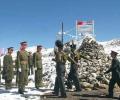
People familiar with the situation in the region said the two sides were engaged in trying to resolve the dispute, but there was no indication of a positive outcome yet as both the armies continued to bolster their positions in disputed areas of Pangong Tso and Galwan Valley and Demchok.

He also said "Chinese belligerence is evident in its continuing propensity to project power outside its region", in turn presenting a "threat to the rules-based international order".

As the military standoff between India and China drags on along the Line of Actual Control (LAC) in eastern Ladakh, Defence Minister Rajnath Singh said the talks between the two sides are going on well and indicated hope for a resolution of the lingering row.
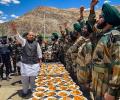
Defence Minister Rajnath Singh on Monday said India is a peace-loving nation that never resorts to any kind of aggression but is always prepared to give a befitting reply if provoked or threatened.
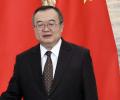
The 61-year-old senior diplomat was taken away for questioning in late July after returning to Beijing from an overseas work trip, the paper reported, quoting people familiar with the matter.

Out of 18, four personnel were critically injured but they are responding to treatment and are stable now, people familiar with the matter said.

'China did not expect India to show such strategic resolve in defending its territorial integrity.'
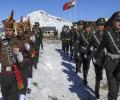
India and China held two days of military talks in an "open and constructive manner" for an early and mutually acceptable resolution of the remaining issues along the Line of Actual Control in eastern Ladakh and agreed to maintain peace on the ground.
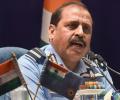
The chief was also briefed extensively about the air maintenance operations in support of the Indian Army and the paramilitary troops there.

The habitats have been provided with proper heating facilities as the region receives up to 40 feet of snow after November every year while temperatures fall up to minus 40 degree Celsius in the winter months.

Corporal Wang Ya Long was handed over to the Chinese military on Tuesday night at Chushul-Moldo border point in eastern Ladakh, the sources said in New Delhi.
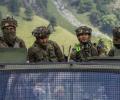
'A breakthrough in eastern Ladakh leading to disengagement and creation of a buffer zone will obviate the need of military deployment through the winter months ahead,' notes Ambassador M K Bhadrakumar.
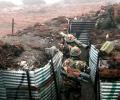
The Chinese military on Thursday said the situation along the India-China border 'at present' is 'generally stable' and both sides have maintained 'effective' communication to resolve the military standoff in eastern Ladakh.

Prime Minister Narendra Modi is visiting Japan and China to further national interests and build cooperation for regional and global peace.

'While my generation carries with it the memory of the Chinese perfidy of 1962, this generation will carry the memory of Chinese perfidy in Galwan.'

Chinese Foreign Minister Wang Yi said that it is imperative for the two sides to view each other as partners and opportunities rather than rivals or threats, and invest their valuable resources in development and revitalisation.
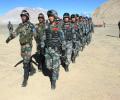
The two countries reviewed the situation in the region during a fresh round of online diplomatic talks under the framework of the Working Mechanism for Consultation and Coordination (WMCC) on border affairs.

India and China have held their first diplomatic talks since withdrawing troops from two face-off points in eastern Ladakh, reflecting on the lessons learned from the border row to prevent future incidents. The two sides agreed to maintain peace and tranquillity in border areas, prepare for the next meeting of Special Representatives on the boundary question, and highlighted the importance of regular exchanges and contacts at diplomatic and military levels. The talks come after the completion of the disengagement process from the last two friction points, following an agreement finalized in October 2022.
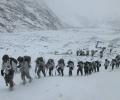
The comments by External Affairs Ministry Spokesperson Anurag Srivastava came at a media briefing when asked about the fresh comments by the Chinese foreign ministry blaming India again for the border situation in eastern Ladakh.
This meeting is taking place after a gap of around four months.

Chinese Foreign Minister Wang Yi has expressed readiness to join hands with India's National Security Advisor Ajit Doval to "properly handle" issues related to the situation on the ground in the border areas, amid the protracted border row in eastern Ladakh.

The participants would include senior ministers dealing with the situation along with the senior military leadership. The leadership is likely to discuss the Chinese military activities in Doklam and other areas on Bhutanese soil along with the Indian preparations to deal with the situation.
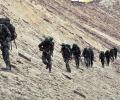
"Some steps are required for full normalcy, we have not reached there," Bagchi said.

It was for the first time that the high-level military talks on the lingering border row spanned two days.

Above-normal cold wave days are expected in some areas of central India, eastern Uttar Pradesh and Bihar during January 2026.
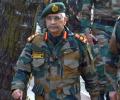
The commanders will also deliberate on the overall situation in Jammu and Kashmir besides delving into issues having national security implications, they said. However, the main focus will be on the situation in eastern Ladakh where Indian and Chinese troops are locked in an eyeball-to-eyeball face-off in Pangong Tso, Galwan Valley, Demchok and Daulat Beg Oldie, the sources said.

India's engagement with China is "complex" and Chinese attempts to unilaterally alter the status quo along the Line of Actual Control (LAC) in eastern Ladakh starting from April-May 2020 seriously disturbed the peace and tranquillity in border areas, the ministry of external affairs (MEA) said in a report on Monday.
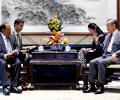
Chinese Foreign Minister Wang Yi will visit India for border talks with NSA Ajit Doval, ahead of PM Modi's visit to China for the SCO summit. The visit aims to improve bilateral ties after recent tensions.
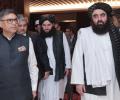
India's Foreign Secretary Vikram Misri has arrived in Beijing for a two-day visit during which he will hold talks with Chinese officials. The visit comes amid ongoing efforts to de-escalate tensions along the Line of Actual Control (LAC) in eastern Ladakh and to resume bilateral cooperation in various fields, including the Kailash Mansarovar Yatra.

'In Eastern Ladakh the Chinese attempted salami slicing.' 'Our response has been superb. Our military has responded magnificently.'

China remains in firm control of an estimated 600-800 square kilometres of Indian territory.

Prime Minister Narendra Modi and Chinese President Xi Jinping were on Thursday seen having brief exchanges ahead of a media briefing by the BRICS (Brazil-Russia-India-China-South Africa) leaders in Johannesburg.

"When we have something to share, we will share. Discussions are ongoing," External Affairs Ministry Spokesperson Anurag Srivastava said replying to a volley of questions on whether India and China are working on specific proposals to resolve the over six-month-long row in eastern Ladakh.
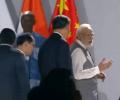
Prime Minister Narendra Modi conveyed to Chinese President Xi Jinping India's concerns on the "unresolved" issues along Line of Actual Control (LAC) in eastern Ladakh during a conversation on the sidelines of the BRICS summit, Foreign Secretary Vinay Mohan Kwatra said on Thursday.
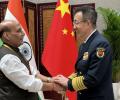
China has called Tibet-related issues a 'thorn' in India-China bilateral relations and a 'burden' for New Delhi, ahead of External Affairs Minister S Jaishankar's visit to China.

Spokesperson in the MEA Anurag Srivastava said both sides have agreed to work for an early resolution to the issue in keeping with broader guidance provided by leaders of the two countries for ensuring peace and tranquillity along the border areas. He, however, did not respond to questions relating to reports of pulling back of troops by both India and China from certain friction points in the Galwan Valley and Hot Spring areas in eastern Ladakh in the last few days.

This is not for the first time that the Dalai Lama is visiting a border region as he had visited Ladakh as well Arunachal Pradesh several times in the past, the functionary said.
